
Metal Covers Built to Seal Prefab Chase Openings
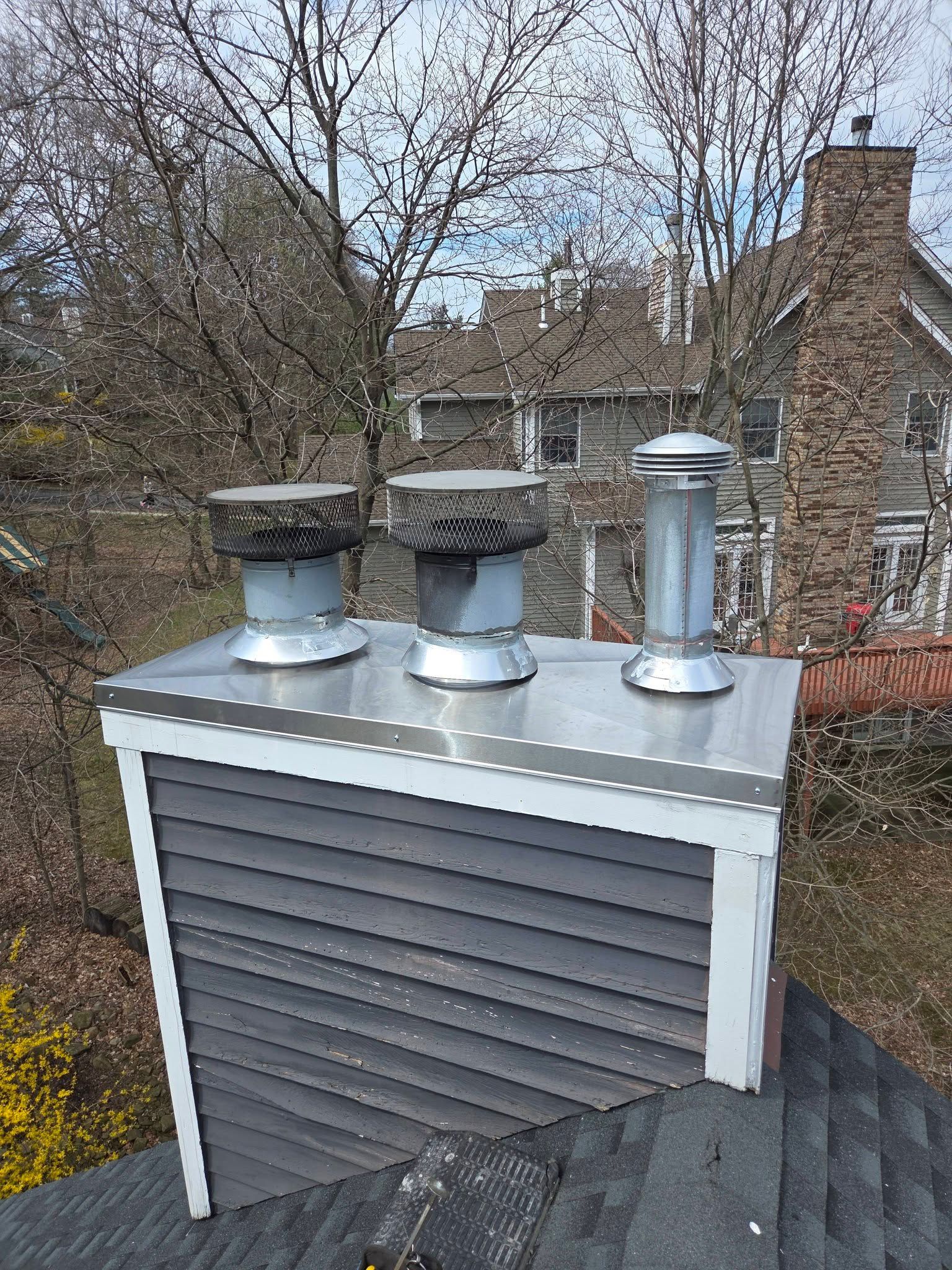
Chase cover installation in Hillsborough for prefabricated chimney systems allowing water into the chase cavity
Prefabricated chimney chases are found in a large share of residential construction built in this region from the 1970s onward—a framed, sided enclosure that houses the flue pipe rather than a traditional masonry column. The original sheet metal covers on these chases are factory-stamped to approximate dimensions and typically made from galvanized steel that corrodes within ten to fifteen years of installation. Once the cover rusts through or lifts at the seam, water enters the chase cavity directly, saturating the wood framing, insulation, and surrounding drywall in a way that often goes undetected until visible damage appears inside the home. Soot Solutions Chimney fabricates and installs custom metal chase covers in Hillsborough sized to the actual opening of each chase rather than to a generic catalog dimension.
The process begins with a full inspection of the chase top and existing cover, followed by precise measurements of the chase opening and perimeter. Soot Solutions Chimney then fabricates a custom cover that overlaps the chase walls, slopes away from the flue pipe collar to channel water outward, and is secured in a way that prevents wind from working the edges up and allowing water back underneath. The slope is a detail that stock covers frequently get wrong—a cover that is flat or pitched toward the center pools water at the seam around the flue pipe collar, which is exactly where penetration occurs first.
Arrange an on-site chase inspection to assess the current cover's condition and measure the opening before moisture damage progresses further into the chase structure.
Why Prefab Chase Systems Fail and What Correct Installation Prevents
The structural failure pattern on prefabricated chases follows a predictable sequence: the factory cover corrodes at the seams or lifts at one corner, water enters the cavity during rainfall, the wood framing absorbs moisture over multiple cycles, and mold establishes in the insulation before any interior staining appears on the ceiling or wall adjacent to the chase. By the time a homeowner notices a water stain or musty odor near the fireplace, the framing inside the chase has typically been wet for more than one season. Soot Solutions Chimney's owner brings a structural repair background to chase cover work, which means the assessment includes not just the cover itself but the condition of the framing and cavity that was exposed.
After a correctly fabricated and installed chase cover is in place, water that reaches the chase top sheds outward and down the exterior siding rather than pooling at the opening. The flue pipe collar—the point where the metal pipe exits through the center of the cover—is sealed so that the joint between cover and pipe does not allow water to track downward into the chase interior. Homeowners with Somerset-area properties that use T-111 or vinyl-sided chase enclosures commonly see the exterior siding at the base of the chase begin to show water staining as the first visible sign that the cover above has failed.
Chase covers are a complete replacement service rather than a repair—once galvanized steel has corroded through, sealing over it adds temporary coverage while the underlying metal continues to degrade beneath. Stainless steel and aluminum are the standard replacement materials because neither corrodes at the rate galvanized steel does in exterior exposure, which is why material selection at the time of replacement determines how long the new cover will last before the same failure recurs.
What Property Owners Ask About Chase Cover Work
These questions address how chase covers are measured, fabricated, and installed on prefabricated chimney systems, and what distinguishes a properly fitted cover from one that will fail prematurely.
How is a custom chase cover measured to fit correctly?
The chase opening dimensions are taken at the top of the chase structure, accounting for any variation in the framing that makes the opening slightly out of square, then the cover is fabricated with an overhang that laps the chase walls so water cannot track back under the edge.
What material should a replacement chase cover be made from?
Stainless steel and aluminum are the appropriate replacement materials for exterior chase covers because both resist the corrosion that causes galvanized steel factory covers to fail within a decade or less of installation.
How does the slope of a chase cover affect water shedding?
A cover pitched outward from the flue pipe collar toward the edges moves water away from the highest-risk penetration point at the center; a flat or center-pitched cover directs water toward the collar seam, which is where leaks typically originate first.
What signs indicate a chase cover has already allowed water into the chase cavity?
Exterior siding staining or warping at the base of the chase, a musty odor near the fireplace wall, and drywall discoloration adjacent to the chase are the most common indicators that water has been entering the cavity over multiple rainfall events.
Why does proper edge securing matter on a chase cover installation?
A cover that is not mechanically fastened to the chase walls can lift at the edges under wind uplift, allowing water to enter at the gap—securing the cover so the perimeter stays in contact with the chase top is what keeps the installation watertight over years of exposure.
Soot Solutions Chimney handles the full process from chase inspection and measurement through fabrication and installation so the replacement cover addresses the structural cause of water entry rather than masking it temporarily. Soot Solutions Chimney also installs chase covers in Bridgewater, Somerset, Princeton, North Plainfield, and Manville. Call (732) 688-7484 to set up a chase inspection and get an accurate measurement for your replacement cover.