
Fireplace Openings Put Back to Work
Insert Installs in Hillsborough for open fireplaces that pull heat out of the room instead of adding it
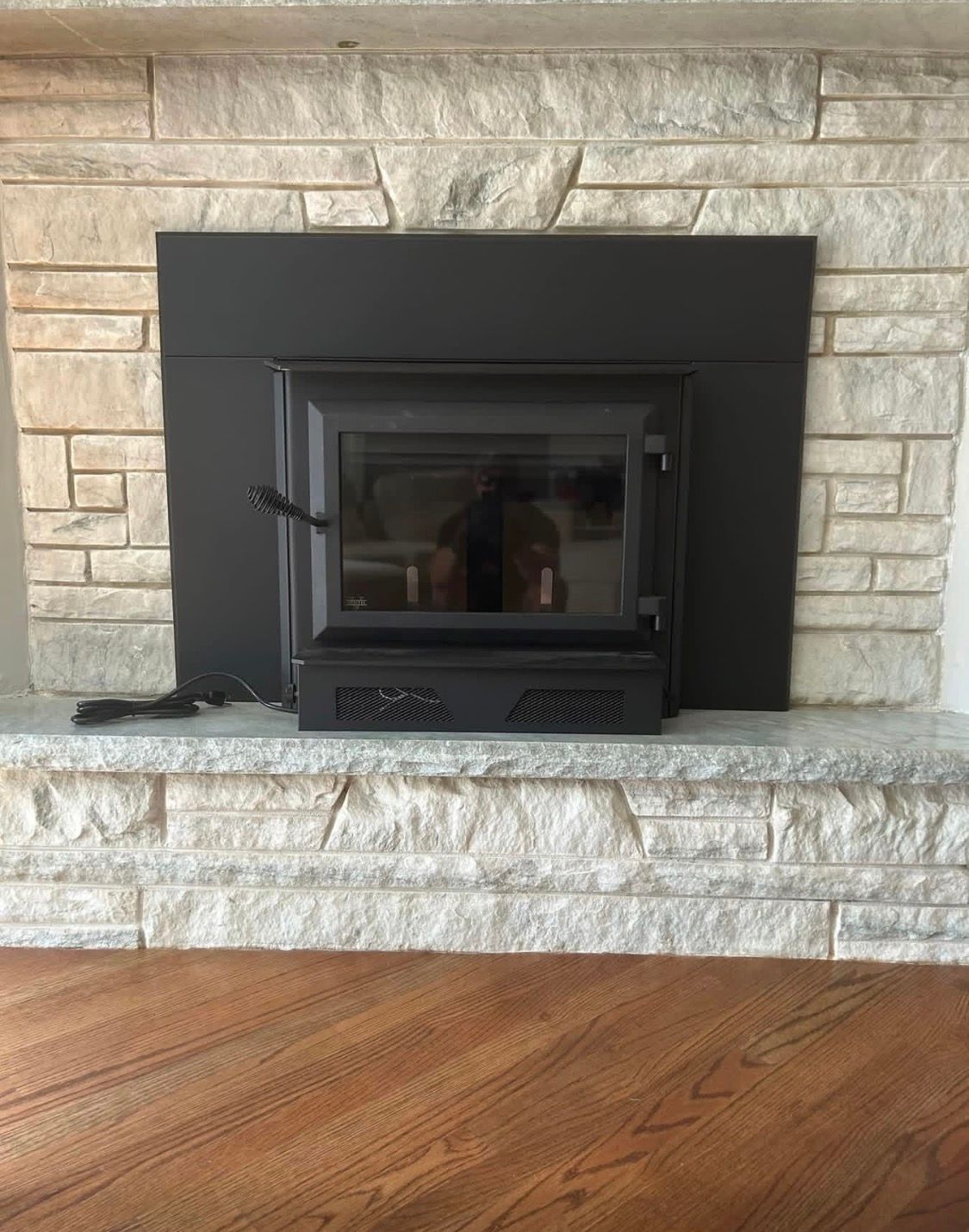
An insert install starts inside your chimney: the flue is measured, checked for draft, and fitted with a liner sized to the appliance before the insert goes in. Soot Solutions Chimney installs wood stove inserts and fireplace inserts in Hillsborough, approaching the job from the mason's side. It matters if your masonry fireplace sits unused because it sends most of its heat up the chimney.
The work begins with an assessment of your chimney for insert compatibility, a measurement of the fireplace opening, and a draft check. The insert is positioned and sealed, a liner sized to the appliance specifications is installed, and connections are tested for draw; if existing clay tiles are too small for the liner, they are removed so it fits, and a final inspection confirms safe operation.
Arrange a chimney assessment to find out whether your fireplace and flue can take an insert.
What a Safe Insert Installation Requires
Sizing comes from the appliance spec, not a guess at the flue, because an oversized liner drafts poorly and builds creosote while an undersized one pushes smoke back into the room. Soot Solutions Chimney will not install a slammer, an insert vented into the old flue without a liner, because creosote collects in that oversized space and raises chimney fire risk.
Once the insert is running, the fire burns behind glass, and the room holds warmth after the fire dies down instead of pulling cold air down the chimney. Smoke goes up on startup without rolling into the room, and the liner gives future insert sweeps a smooth, continuous path to brush.
Not every fireplace is a candidate. Cracked firebox brick, a damaged smoke chamber, or a deteriorated crown may need masonry work first, and the depth and width of your opening limit which insert sizes fit.
What Homeowners Ask Before an Insert Goes In
Most insert questions come down to the chimney behind the fireplace, so these answers focus on the flue and liner.
What happens during the compatibility assessment?
The chimney is checked for draft, the opening is measured, and the flue is inspected to confirm it can accept a liner sized to the insert you want.
Why are clay flue tiles sometimes removed?
Some tiles leave too little room for the liner diameter the appliance calls for, and removing them gives a proper fit instead of a smaller liner that misses the spec.
How does an older masonry chimney in Hillsborough change the installation?
Flue and firebox sizes vary from house to house in Hillsborough, so the measurements and draft check drive the liner and insert choice rather than a standard kit.
What should you check after the first few fires?
Look for smoke escaping around the surround, doors that no longer close tightly, or a fire that struggles to draw on startup.
How often does an insert need to be swept?
Inserts build creosote in the liner like any wood stove, and a dark, crusty, or glazed buildup inside the liner means a sweep is overdue.
A fireplace that sat unused for years can become a working heat source once liner and insert are matched. Soot Solutions Chimney also installs fireplace and wood stove inserts in Bridgewater, Somerset, Princeton, North Plainfield, and Manville. Book an insert consultation and get a clear answer on what your chimney will accept.