
Caps That Keep Water and Wildlife Out
Chimney cap installation in Hillsborough for open flues drawing in rain, debris, and nesting animals
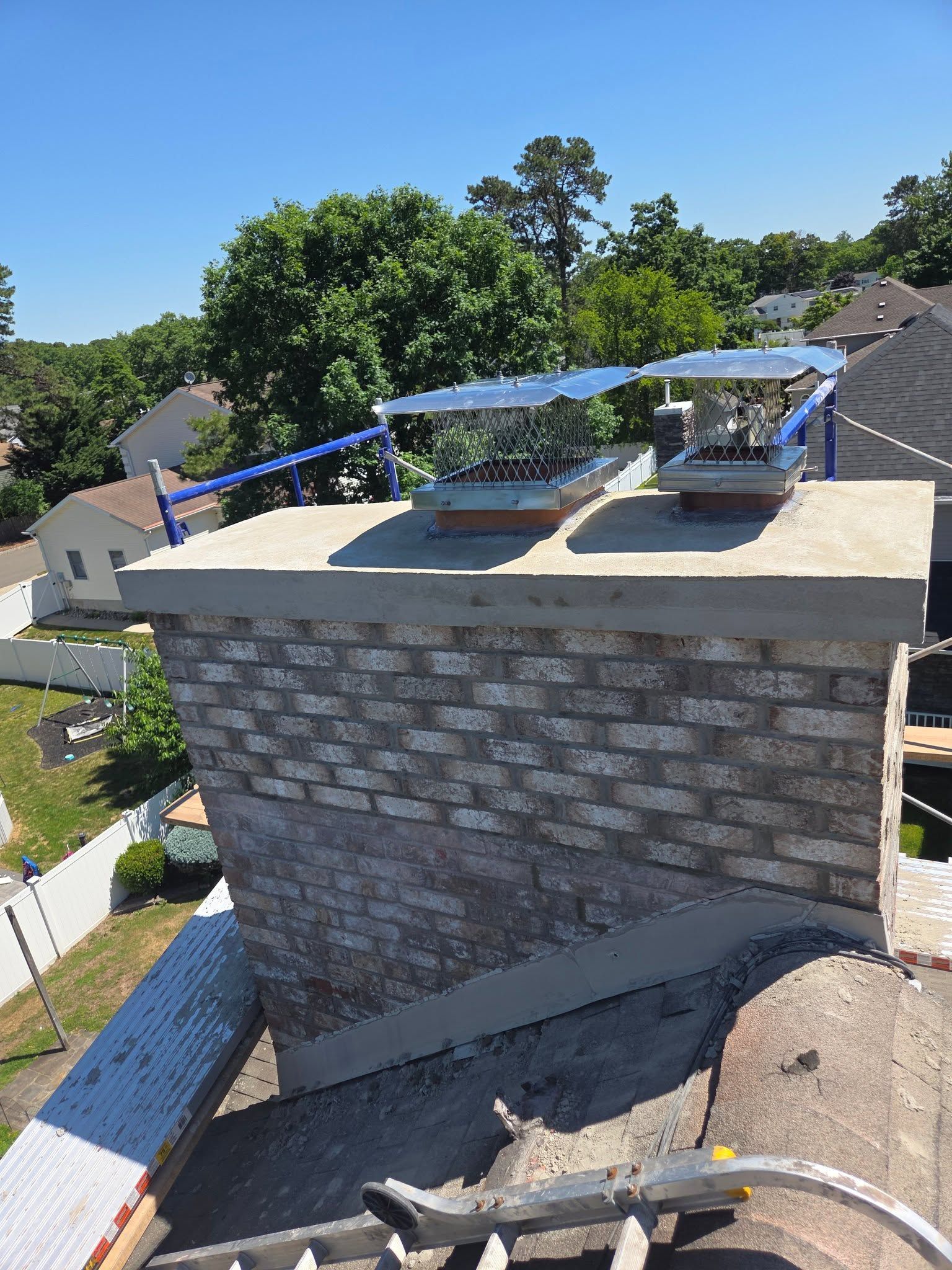
Soot Solutions Chimney installs custom chimney caps in Hillsborough that fit the actual dimensions of your flue rather than relying on a stock size that leaves gaps at the edges. An improperly sized cap creates the same water entry problems as having no cap at all—rain sheds inward instead of away from the opening, and animals find the clearance they need to get inside the flue. Homeowners with uncapped or poorly capped chimneys often notice damp firebox odors, staining on the smoke shelf, or evidence of nesting that restricts draft and creates a fire hazard.
The installation process starts with a full evaluation of the chimney's dimensions and current condition, including the flue liner opening, the crown, and the top course of brick. Soot Solutions Chimney measures precisely before fabricating or sourcing the cap so the fit allows proper draft while blocking water and animals from entering. This matters particularly on older masonry chimneys common in Hillsborough, where hand-laid brickwork often produces flue openings that do not match standard catalog sizes—meaning a cap that looks close enough often leaves a gap wide enough for a starling or enough clearance for wind-driven rain to work underneath the skirt.
Schedule an on-site chimney evaluation to confirm which cap configuration fits your flue correctly and what condition the top of the chimney is in before installation.
How a Proper Cap Fit Changes What Enters Your Flue
During the cap installation, the focus is on two things working together: the fit at the flue tile and the slope of the cap's lid. A cap that sits too loosely rocks in wind and allows water to enter from the sides; one with a flat or nearly flat lid pools water at the center and accelerates corrosion at the seams. Soot Solutions Chimney, whose owner is a mason by trade with seven years of chimney service behind him, approaches cap selection and custom fabrication with an understanding of how water moves across masonry—which affects both the cap design chosen and how it is secured to the chimney crown.
Once the cap is correctly installed, the interior of the flue stays dry between uses, the firebox no longer takes on the musty smell that saturated brick produces, and the chimney draft functions the way it should because the opening is not partially blocked by a bird nest or debris accumulation. You can visually confirm the cap is seated properly from the ground—there should be no visible gap between the cap's base and the flue tile, and the mesh sides should show no gaps wide enough to pass a finger through.
Cap installation can be done as a standalone service or combined with crown inspection or waterproofing if the top of the chimney shows other signs of wear. When both the cap and crown are addressed in the same visit, staging the crown work before cap installation ensures the cap seats against a solid, stable surface rather than one that may shift as crown repairs cure.
Common Questions About Chimney Cap Installation
These questions address the specifics of cap selection, fitting, and what the installation process actually involves for masonry chimneys in Hillsborough.
What type of chimney cap works best for a masonry flue with an irregular opening?
Older hand-laid masonry chimneys often have flue openings that are slightly off-square or sized outside standard catalog dimensions, which is why a custom-fabricated or adjustable cap that is measured on site produces a better result than a stock size selected from a chart.
How is a chimney cap secured so it does not shift or blow off in high wind?
Caps are fastened directly to the flue tile or crown using masonry anchors or set screws tightened against the flue liner, depending on the cap style—a cap that rests loosely on top of the tile without mechanical fastening will lift under negative pressure from wind.
What happens to chimney draft when a cap is installed?
A properly sized cap with adequate mesh clearance does not restrict draft; the opening area of the mesh sides should be at least four times the area of the flue opening to avoid back-drafting, which is a standard sizing ratio applied during cap selection.
Why does the condition of the chimney crown matter before installing a cap?
If the crown is cracked or separating from the chimney walls, installing a cap over it leaves an active water entry point just below the new cap—crown repairs should be completed first so the cap is seated against stable, intact masonry.
What should you look for in a cap after installation to confirm it is correctly fitted?
From the roofline, the base of the cap should contact the flue tile evenly on all sides with no visible daylight underneath, and the mesh should be free of existing debris compression or distortion that would reduce airflow.
Soot Solutions Chimney handles cap measurement, fabrication coordination, and installation as a complete service so the cap that goes on your chimney fits the flue that is actually there. Soot Solutions Chimney also installs chimney caps in Bridgewater, Somerset, Princeton, North Plainfield, and Manville. Contact Soot Solutions Chimney at (732) 688-7484 to arrange a flue measurement and cap fitting appointment.