Wood Stove Flues Cleaned to a Documented Standard
Wood stove sweep in Hillsborough for systems with creosote accumulation, restricted draw, or no recent cleaning history
What changes when a wood stove flue is swept correctly is measurable: draw improves, combustion efficiency returns, and the creosote that was coating the liner interior no longer presents a fire ignition risk during high-temperature burns. Soot Solutions Chimney produces that result for wood stove owners in Hillsborough by combining a thorough flue sweep with a hands-on inspection of the stove connection and an assessment of chimney condition. Family-owned and operated by a mason with seven years in the chimney trade, this is not a company that treats wood stove sweeps as a faster, simpler version of a fireplace cleaning—the two systems behave differently and are serviced differently.
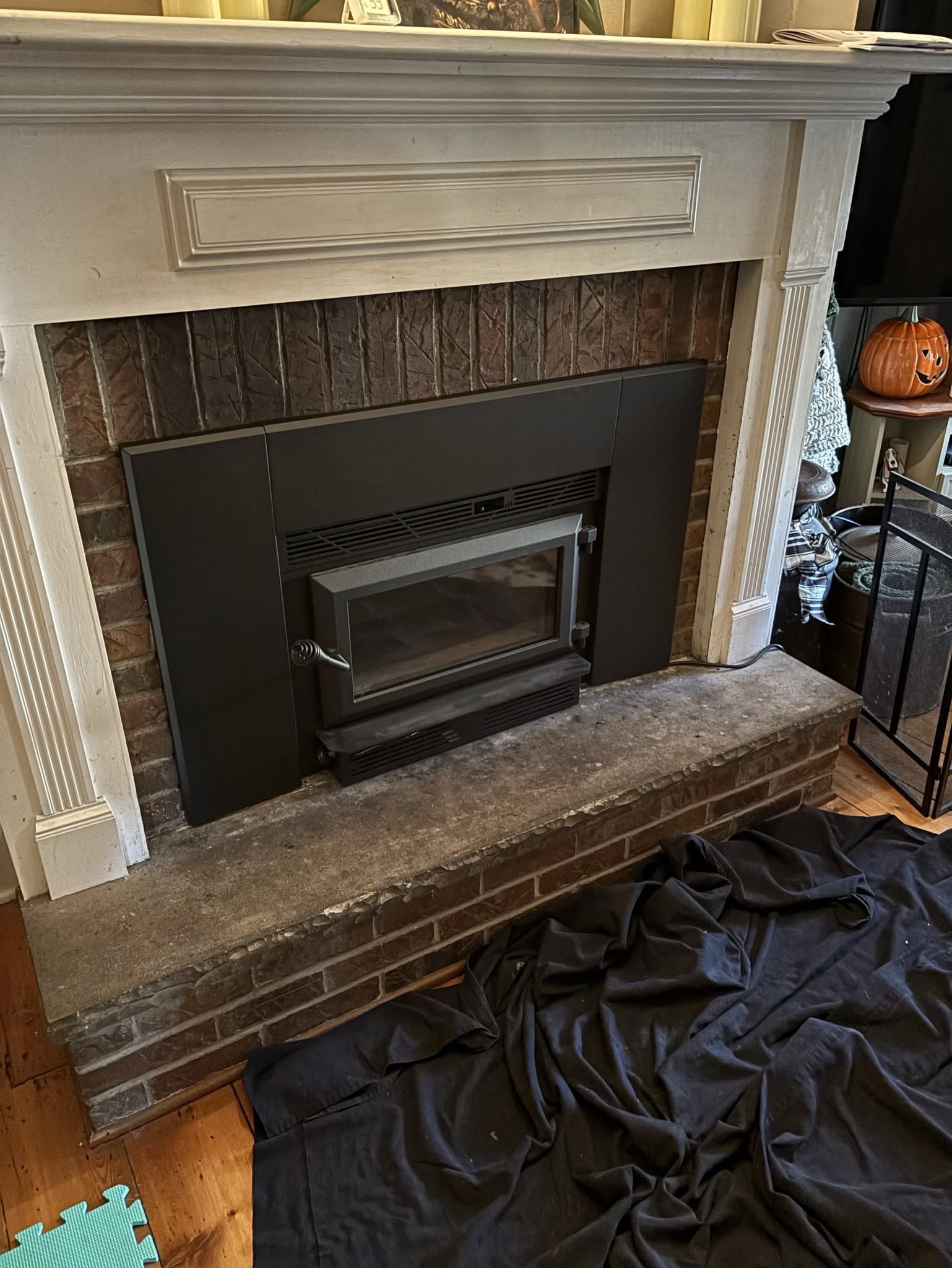
The sweep begins at the stove connection, where the flue pipe meets the chimney, and works through the full length of the flue to remove creosote and any obstructions. After clearing the flue, the stove itself is cleaned and checked for proper draw—meaning the airflow through the system is confirmed to be moving in the right direction and at adequate velocity before the work is considered complete. A condition report documents what was found in the flue and what, if any, repairs or follow-up work is recommended.
Set up a wood stove sweep appointment to confirm your system is operating safely and to get a written account of your flue's current condition.
Why Wood Stove Flues Accumulate Creosote Differently
Many Hillsborough homes in the Green Brook area and throughout the township have wood stoves that were installed as conversions from older coal-fired heating systems or as additions to existing masonry fireplaces. Wood stoves run at higher sustained temperatures than open fireplaces, but they also operate in low-oxygen smolder conditions during overnight burns, which is when stage two and stage three creosote—the dense, glazed forms—deposit most aggressively on liner surfaces. The flue pipe connection point, where the stove collar meets the thimble entry into the chimney, is typically the location where the densest accumulation collects and where deterioration at joints is most likely to be found.
After a completed wood stove sweep, the draw check produces a clear, observable result: smoke from a test source moves directly up through the flue without backdrafting into the room. The interior of the flue has visible bare liner surfaces rather than dark, layered deposits, and the stove collar connection is confirmed clean and properly seated.
Soot Solutions Chimney's background in masonry means that when the sweep uncovers liner deterioration, broken tile fragments in the ash, or offset sections in the flue, those findings are interpreted by someone who understands what they mean structurally—not just cosmetically. That distinction matters when the question is whether a liner repair or a full relining is the appropriate next step for a given system.
Answers About How the Work Is Done
These questions address the specific process involved in sweeping wood stove flues, including what differentiates this service from a standard fireplace sweep and what to look for before and after the work is completed.
What is checked at the stove connection before the flue sweep begins?
The collar and thimble entry are inspected for creosote accumulation, joint integrity, and whether the connection is properly sealed—issues at this point affect how the rest of the system draws and how quickly the flue reaccumulates deposits.
How does the sweep address stage two creosote that has glazed onto the liner?
Stage two glazed creosote requires rotary tools rather than standard brushes; the mechanical action breaks the hardened deposits free from the liner surface so they can be removed rather than just scraped across.
When should a wood stove sweep be scheduled relative to the heating season?
Sweeping before heavy seasonal use begins allows the flue condition to be documented while there is still time to complete any repairs before the system is needed regularly.
What does proper draw feel like after a wood stove sweep is completed?
A correctly drawing stove ignites easily, produces no smoke rollout into the room when the door is opened, and maintains consistent combustion without requiring constant damper adjustment to prevent smoldering.
How do wood stove flues in converted Hillsborough coal-era homes differ from purpose-built installations?
Coal-era flue sizing and liner material were selected for a different combustion profile; when those chimneys are adapted for wood stove use, the liner diameter and condition must be assessed against the stove's actual output specifications, not the original design intent.
Soot Solutions Chimney also performs wood stove sweeps in Bridgewater, Somerset, Princeton, North Plainfield, and Manville. To schedule a sweep with a full condition report, call (732) 688-7484 and describe your stove setup and last known cleaning date.