Caps Built to Your Chimney's Measurements
Custom Chimney Caps in Hillsborough for masonry chimneys where an off-the-shelf cap will not sit square
Hillsborough's housing runs from older farmhouses to late-twentieth-century subdivisions, and their masonry chimneys were built to whatever size the mason and floor plan called for. Soot Solutions Chimney builds custom chimney caps for those chimneys, fabricating a metal cap that fits each flue and crown instead of forcing a universal size onto an odd-shaped top. You need one if your chimney has no cap, a rusted cap, multiple flues, or leaves landing in the firebox.
The work starts with measurements of the flue opening and the exterior dimensions of the chimney top. A stainless steel or aluminum cap is fabricated with clearance above the flue for proper draft, then fastened securely and sealed where it meets the crown, with mesh screening that keeps animals and leaves out while helping prevent downdrafts.
Request a chimney top measurement so a cap can be sized to your flues.
What a Properly Fitted Cap Prevents
A cap works at the top of the flue, where water, debris, and animals first get in. Water running down an open flue soaks clay tiles and the smoke chamber and wears at mortar joints, which is how small problems turn into tuckpointing and crown repairs, while nesting material on the smoke shelf can block the flue entirely.
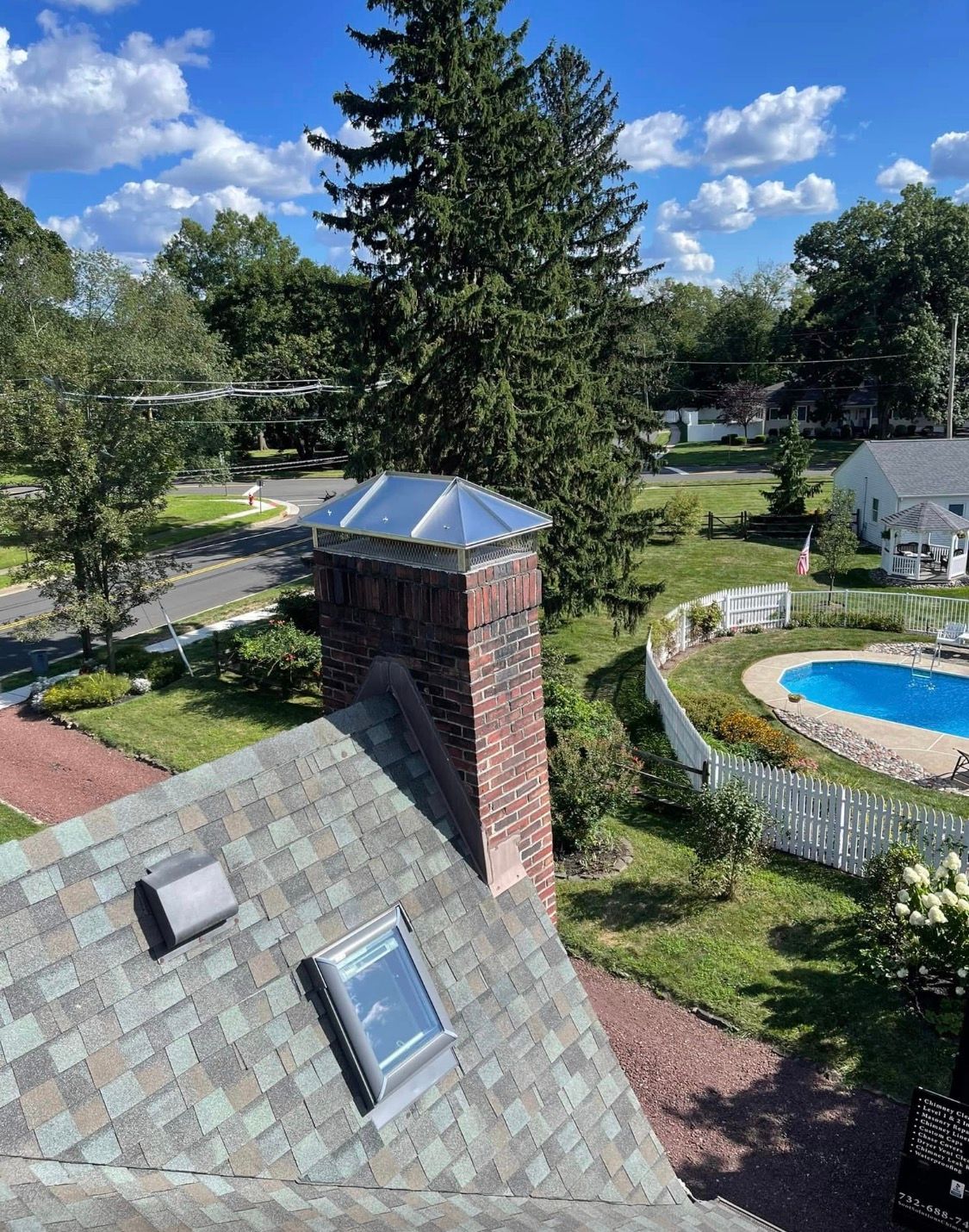
After the cap is on, you stop finding twigs or droppings in the firebox and stop hearing animals in the chimney. From the ground you see a cap sitting level over every flue. Soot Solutions Chimney seals it at the crown so that joint does not become a new entry point for water.
Stainless steel is the common choice for wood-burning flues, while aluminum is lighter. A multi-flue chimney typically gets one cap sized so each flue keeps its own draft, and a cracked crown should be repaired first, because the seal is only as good as the masonry under it.
Answers About How Custom Caps Are Made
Because no two masonry chimneys are alike, most of these answers start with measurement and fit.
What gets measured before a custom cap is fabricated?
The flue opening, the outside dimensions of the chimney top, and the height needed above the flue for draft clearance set the size of the base, screen, and hood.
Why does mesh size matter on a chimney cap?
Mesh has to stop animals and leaves but stay open enough for smoke, because mesh that is too fine collects soot and restricts draft.
How do older chimneys in Hillsborough affect the cap design?
Older Hillsborough chimneys often have flues and crowns that miss standard cap sizes, and some carry two flues on one stack, so the cap is built to that specific top.
What does a properly installed cap look like from the ground?
It sits level, covers each flue completely, and shows no gap at the base where it meets the crown.
When should a cap be inspected after installation?
Have it checked during your regular chimney sweep, when the screen can be cleared of soot and the fasteners and crown seal confirmed tight.
Each cap is fabricated by a mason with seven years in the chimney trade, to protect the brick, mortar, and flue tile beneath it. Soot Solutions Chimney also builds and installs custom chimney caps in Bridgewater, Somerset, Princeton, North Plainfield, and Manville. Set up a measurement visit to get a cap made for the chimney you actually have.