
Crowns Rebuilt to Direct Water Clear of the Flue
Chimney crown repair and replacement in Hillsborough for masonry chimneys with cracked or deteriorating crown surfaces
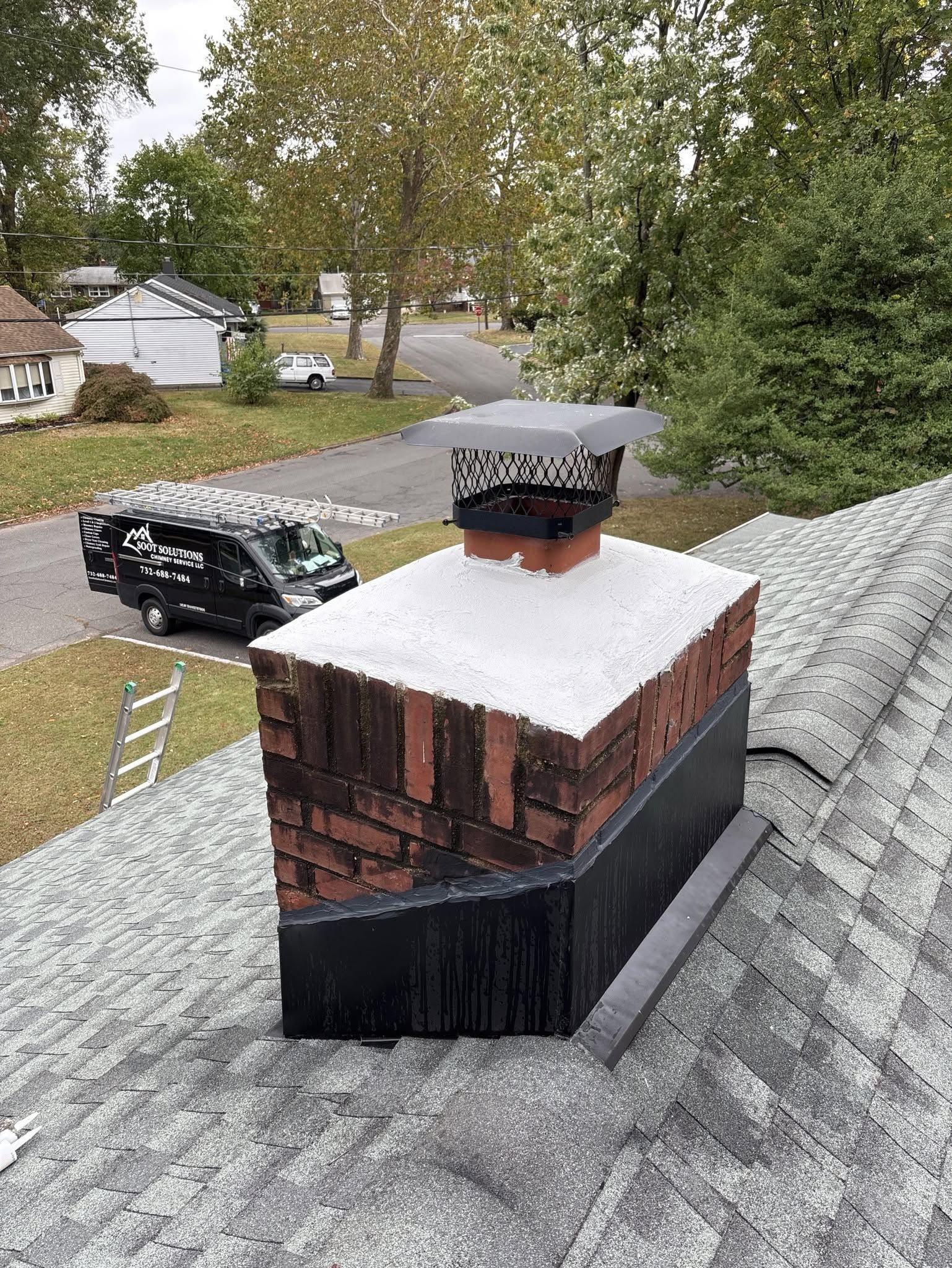
A cracked or separated chimney crown turns what should be a sloped water-shedding surface into a collection point that channels moisture directly into the masonry below. Colonial and Victorian-era homes in Hillsborough—construction types well represented across the township—were built with masonry chimneys that depend on an intact crown to protect the brick courses beneath the roofline from sustained water exposure. When the crown cracks at the flue tile or separates from the chimney wall, water works into those gaps during every rain event, and the brick and mortar below begin to deteriorate from the inside out rather than from the exterior face where it would be visible earlier. Soot Solutions Chimney repairs and replaces chimney crowns in Hillsborough, rebuilding damaged crowns with correct slope and proper edge sealing rather than applying surface coatings over existing failures.
The inspection process involves evaluating the crown for cracks, separation from the chimney walls, the condition of the joint where the crown meets the flue tile, and whether previous patch repairs have held or begun to fail themselves. When damage is found, deteriorated material is removed before any rebuild begins—applying new material over compromised substrate is one of the most common shortcuts in crown work, and it produces a repair that separates along the same fault line within one to two seasons. Soot Solutions Chimney's owner is a mason by trade, which means the rebuild is approached as a structural repair: the crown is formed with the correct outward slope, the flue tile joint is properly tooled, and the perimeter edge is sealed where it meets the chimney brick.
Request a crown inspection to determine whether the existing crown can be repaired or needs to be removed and rebuilt from the base course up.
What Proper Crown Construction Actually Requires
A correctly built chimney crown does three things simultaneously: it slopes outward from the flue tile so water sheds away from the opening rather than pooling at the center, it overhangs the brick slightly so dripping water clears the top course of masonry rather than running back against the face, and it is formed so the joint at the flue tile allows for differential movement without cracking open. That third requirement is where many patch repairs fail—rigid material bonded directly to the flue tile cracks as the tile and the surrounding crown expand and contract at different rates, reopening the joint that was meant to be sealed. Soot Solutions Chimney addresses this as part of the rebuild rather than treating it as a cosmetic detail.
After a correctly rebuilt crown has cured, the most immediate observable change is that water no longer pools at the top of the chimney after rainfall—it sheds outward across the sloped surface and drips clear of the brick below. Over time, the mortar joints in the courses directly below the crown stop showing the progressive darkening and softening that indicates sustained saturation, and interior staining near the fireplace that was previously attributed to a crown failure stabilizes and dries out once the water entry point is eliminated.
Crown work is often identified during a routine chimney inspection rather than after an active leak has appeared inside the home, because deterioration at the crown level typically advances for more than one season before interior evidence becomes visible. When crown repair is combined with flashing inspection or waterproofing in the same service visit, the chimney top is addressed as a system rather than as individual components repaired in isolation.
Answers About How Crown Repair and Replacement Is Done
The questions below address the repair and rebuild process for masonry chimney crowns, including what preparation the work requires and how to identify whether a previous repair has held or begun to fail again.
How is deteriorated crown material removed before a rebuild begins?
Cracked and loose crown material is chipped and ground back to solid substrate rather than built over, because new material bonded to a compromised base will separate along the existing fault line as the new repair cures and begins its own expansion cycles.
What is the correct slope for a chimney crown and why does it matter?
The crown surface should slope downward from the flue tile toward the outer edge at a pitch sufficient to move water outward rather than allowing it to pond at the center—a flat crown retains water at the highest-risk point, which is the joint between the crown surface and the flue tile.
How can you tell if a previous crown patch repair has failed?
Visible cracking along the line where new material was applied over old, separation at the flue tile joint, or staining beneath the crown overhang on the upper brick courses are the clearest indicators that a patch repair has opened up and is no longer functioning as a water barrier.
Why do masonry chimneys in older Hillsborough homes experience crown failure more frequently than newer construction?
Chimneys on homes built before standardized crown specifications became common were often finished with flat mortar wash rather than a properly sloped and overhanging crown, making them structurally prone to cracking as the chimney settles and the thin mortar cap lacks the mass to resist movement.
What maintenance does a rebuilt chimney crown require after installation?
Once a properly built crown has cured fully, inspecting the flue tile joint and outer perimeter edge every few years allows any minor cracking to be addressed before it progresses to the point of water entry, extending the life of the rebuild significantly.
Soot Solutions Chimney approaches crown work as a mason-trained contractor rather than as a surface coating application, which means the rebuild addresses the structural condition of the chimney top rather than concealing existing damage. Soot Solutions Chimney also repairs and replaces chimney crowns in Bridgewater, Somerset, Princeton, North Plainfield, and Manville. Call (732) 688-7484 to schedule a crown inspection and find out whether repair or full replacement is the appropriate scope for your chimney.